This course has been specially prepared to teach you about shipborne meteorological instruments. When working with shipborne meteorological instruments it is crucial to learn about preventive measures. If you measure the weather you should know that weather maps help indicate the atmospheric conditions of various portions of the Earth’s surface. Some weather variables produce environmental conditions that form a chain reaction but may not remain entirely in the atmosphere. Do you know that temperature pressure and humidity (moisture) can interact to form clouds? If you take your ship out without understanding the atmospheric conditions you will risk your life and the shipping vessel. Prepare yourself by understanding the terms: ‘aneroid barometer’ ‘Stevenson screen’ ‘whirling psychrometer’ ‘relative humidity’ and different types of hygrometers used when measuring atmospheric pressure.You will then discover the seawater temperature bucket and the procedures for using it to measure sea surface temperature. We will identify the various layers of the atmosphere starting from the ground level. The layers of the atmosphere include the troposphere the stratosphere the mesosphere the thermosphere and the exosphere. We help you analyse the environmental curve and the environmental lapse rate (ELR). We explore temperature inversion and the classification of the atmosphere. Do you know that there are certain losses in solar radiation? To learn about these losses you need to understand the modes of heat transfer and how heating happens in the atmosphere. Study the factors influencing the heating effect insolation evaporation and condensation.We continue by exploring vapour pressure changes and how to apply vapour pressure to a liquid. Do you know that absolute humidity and relative humidity are not the same? We investigate their differences and discuss the formula for calculating relative humidity. Finally you will become acquainted with terms such as ‘typical isobaric pattern’ ‘isallobars’ and ‘barometric tendencies’. Estimating the type of weather to expect is essential for a navigator so understanding the ‘barometric tendency’ characteristics is vital. If you do not complete this course you will lack critical knowledge about handling shipborne instruments. This free online course will be of great interest to students researchers and anyone interested in understanding the atmosphere and shipborne meteorological instruments. So register for this course today.
Beginner Meteorological Instruments and Atmospheric Pressure
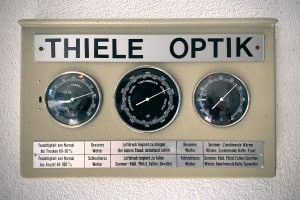
Beginner Meteorological Instruments and Atmospheric Pressure
Sold by:
Similar Products












Sponsored
Paco Rabanne Pure Xs For Her - Edp - Volume: 80 Ml$112.00List: $140.00