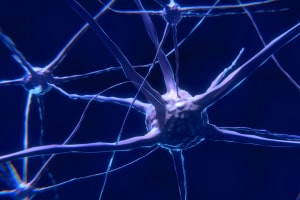
It is estimated that there are more neurons in the human brain than stars in the Milky Way. Incredibly they are all connected in complex neuronal webs making our brains the most extensive and complex computational networks in the known universe about which scientists know more than they do the brain. Neurophysiology attempts to explain this enthralling organ’s working complexities and focuses on the ‘action potential’ to decipher how neurons communicate with one another. By understanding how these networks and circuits in the human brain function neuroscientists find connections between brain dysfunction and physical mental and even emotional illness. This exciting online course gives you the latest up-to-date information regarding the biomechanics of the human brain’s impulses.We start by examining the neuron’s cell membrane’s electrical and chemical properties. We demonstrate how positively charged sodium and potassium ion channels in the cell membrane create a different electrical charge between the inside and the outside of a neuron cell. This electrical charge difference creates what neurophysiologists call the ‘resting membrane potential’. We investigate how an electrical circuit can represent this neuronal membrane and how the potential across such a membrane can be expressed using the constant field equation. This course teaches you how to use voltage clamps in experimental analysis of the cell membrane. We study Alan Hodgkin’s and Andrew Huxley’s discovery of the generation of ‘action potentials’ in the giant axon of the squid and explain how their discoveries taught scientists how to activate and deactivate ion channels in the cell membrane. We then examine axons and dendrites’ to understand how the electrical activity created by an impulse spreads to other neurons.After axons and dendrites we move on to the neuronal ‘cable theory’ which is used to develop computational compartmental models that provide researchers with a theoretical basis for dendritic function. These computational models are combined with mathematical models for the generation of synaptic potentials and ‘action potentials’ and can provide a complete theoretical description of neuronal activity. We demonstrate the use of free software that allows you to create your own model and lay out the instruments used in laboratory testing of impulses. We provide the skills required to perform an electroencephalogram (EEG) and show you how to use bioamplifiers and filters to record and interpret brain activity. We go through cleanroom classifications protocols and safety regulations until you can use a cleanroom. This course suits aspiring neuroscientists or anyone who is fascinated by the human brain as it traces the origins of thought itself.
Understanding Action Potentials in Neural Networks
Understanding Action Potentials in Neural Networks
Sold by:
Similar Products