This course on ship stability and Simpson’s rules introduces you to the history of adaptive and variant designs in ships. We begin by explaining the contributions of computational fluid dynamics and ship model testing to improve reliable and accurate ship designs today. Next you will discover the ship stability issues created by external forces that change the state of equilibrium and endanger the vessel. Then learn the principal dimensions used for performing basic calculations and the importance of noting a ship’s length (L) breadth (B) and draught (d). We cover the concepts and calculation of density and relative density and introduce you to the definition functions and calculation of the wetted surface area (WSA). We study this and the relevance of the Haslar formula Taylor’s formula and Denny’s formula. Finally you will learn about the relationship between displacement and a wetted surface area of two similar vessels.The following section explains hydrostatic pressure’s principles calculations and practical applications. We outline load concepts on an immersed plane and an immersed vertical and horizontal plane. We teach you about the four coefficients of importance needed to understand the basics of ship stability along with their formulas. Learn to identify the block midship waterplane and prismatic coefficients. We cover the calculation and effect of tonnes per inch on the ship’s draft before examining the plotting and characteristics of the Bonjean curves. We demonstrate how to draw predicted water lines and read drafts showing where you enter the Bonjean curves. Other important information is the stations and the types of stations that include forward perpendicular aft perpendicular and midship stations. Explore the waterlines sectional lines and centrelines which are points of intersection formed when each plane intersects with the ship’s hull.Furthermore this course will help you become familiar with the numerical calculations for the waterplane area sectional area and submerged volume. We summarise a brief history of Simpson’s rules and teach you the characteristics applications and equations of Simpson’s first second and third rules. We teach you the calculations for the moment of area the moment of inertia and the moment of volume. You will also learn about semi-ordinates appendages and common intervals. We cover the displacement calculation including and excluding tonnes per inch. You will become acquainted with the formula for finding waterplane areas using Simpson’s three rules and the trapezoidal rule. This course will be of great interest to students researchers and anyone interested in applying Simpson’s rules in ship stability. So register for this course today and improve your expertise in this technical area.
Introduction to Ship Stability and Simpson's Rules
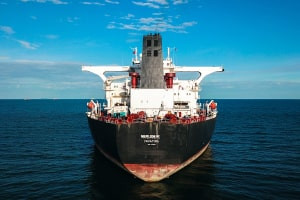
Introduction to Ship Stability and Simpson's Rules
Sold by:
Similar Products

Sponsored
Fur Blanket - THE WILDEST DREAM Beige | Rozmiar: 98x59" (250x150cm)Wildest-1-5
$690.00Cerqular

Sponsored
Fur Blanket - THE WILDEST DREAM Beige | Rozmiar: 118x19" (300x50cm)Wildest-1-7
$345.00Cerqular

Sponsored
Fur Blanket - THE WILDEST DREAM Beige | Rozmiar: 118x59" (300x150cm)Wildest-1-8
$759.00Cerqular



Sponsored
Fur Blanket - THE WILDEST DREAM Brown | Rozmiar: 59x59" (150x150cm)Wildest-1-3-1
$460.00Cerqular

Sponsored
Fur Blanket - THE WILDEST DREAM Beige | Rozmiar: 118x118" (300x300cm)Wildest-1-10
$1380.00Cerqular

Sponsored
Fur Blanket - THE WILDEST DREAM Gray | Rozmiar: 79x59" (200x150cm)Wildest-1-4-2
$575.00Cerqular

Sponsored
Fur Blanket - THE WILDEST DREAM Brown | Rozmiar: 118x79" (300x200cm)Wildest-1-9-1
$1081.00Cerqular

Sponsored
Fur Blanket - THE WILDEST DREAM Gray | Rozmiar: 118x19" (300x50cm)Wildest-1-7-2
$391.00Cerqular

Sponsored
Fur Blanket - THE WILDEST DREAM Gray | Rozmiar: 59x19" (150x50cm)Wildest-1-1-2
$230.00Cerqular

Sponsored
Fur Blanket - THE WILDEST DREAM Brown | Rozmiar: 79x59" (200x150cm)Wildest-1-4-1
$575.00Cerqular

Sponsored
Fur Blanket - THE WILDEST DREAM Beige | Rozmiar: 79x59" (200x150cm)Wildest-1-4
$575.00Cerqular

Sponsored
Fur Blanket - THE WILDEST DREAM Brown | Rozmiar: 59x19" (150x50cm)Wildest-1-1-1
$230.00Cerqular

Sponsored
Fur Blanket - THE WILDEST DREAM Gray | Rozmiar: 79x79" (200x200cm)Wildest-1-6-2
$920.00Cerqular

Sponsored
Fur Blanket - THE WILDEST DREAM Gray | Rozmiar: 59x59" (150x150cm)Wildest-1-3-2
$460.00Cerqular