Do you want to understand how effective methods for preventing and managing allergic diseases have been developed over the years? This course introduces you to the system that protects organisms against various invading pathogens. We offer insight into the intricate details of how an immune response is activated when a pathogen enters the host and how the foreign antigen is collectively destroyed. Immune responses can be classified as ‘humoral-mediated’ immunity and ‘cell-mediated’ immunity. The former provides a defence against bacterial pathogens and viruses while the latter protects against fungi viruses and facultative intracellular bacterial pathogens (including parasites). We illustrate how cell-mediated immunity is superior to humoral-mediated immunity because it lasts longer and can also create a ‘memory’ within the organism which enables it to recognize the initial pathogen in the event of secondary exposure. We also demonstrate the importance of understanding the structure of an antibody before getting deeper into the science of immune responses.We begin with the general structure and functions of antibodies and how they destroy foreign pathogens. We unpack the four-step process whereby the host organism produces antibodies. First the pathogen makes contact with the immune cells during the ‘lag’ phase resulting in a steady rise in the production of antibodies during the ‘log’ phase. At the ‘plateau’ phase an equilibrium between the synthesis and catabolism of antibodies is reached. The process ends with a decrease in the production of antibodies in the ‘decline’ phase. We investigate the process that produces antibodies while you discover the role of antigen-presenting cells such as macrophages. We then compare polyclonal and monoclonal antibodies.We then move on to the fusion of spleen and myeloma cells and how to select hybridoma cells. What is the role of nucleic acid synthesis in the growth and multiplication of cells? Learn the answer to this question and many more with this course. We offer insight into the interaction between antibodies and antigens and how you can exploit this when designing different types of tools that can be used to study various biological processes. Finally we study antibody interactions monoclonal antibody production indirect agglutination reactions and the ‘Pull-Down assay’ procedure. This course is of interest to biotechnology students or anyone looking to enter the field of immunology. It breaks down the complex methods that the body employs to protect itself and offers techniques to help that process.
Immunology Techniques
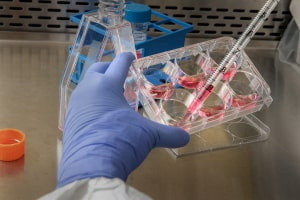
Immunology Techniques
Sold by:
Similar Products








Sponsored
Perfumes of Polignano Immense Acque Eau de Parfum 100 ml$266.00List: $332.00

Compare prices from 2 stores

Sponsored
Tiziana Terenzi Draconis PAR U 100 ml$222.00List: $277.00
Compare prices from 2 stores






Sponsored
Filippo sorcinelli Lux Visionaria Unisex Perfume Extract 100ml$785.00List: $981.00
Compare prices from 2 stores