This course introduces you to the essential feature that makes for successful boat design. We unpack the concept and definition of buoyancy together with the principle of floatation. Explore the vertical and longitudinal distance relating to the draft (or draught) of a ship along with the law of floatation and the concepts and characteristics of displacement tonnage. We discuss the differences and relationship between displacement and the mean draft. Become familiar with displacement tables deadweight scales and draft curves used to relay displacement information at different levels. There are two constituents of displacement that include light and load displacement. We will also cover the concepts and functions of deadweight and discuss the relationship between the waterplane area and tons per inch along with the effect of tons per inch on the ship’s draft.Next we work through the concepts functions calculations and moment of a ship’s trim to change it by one inch. You will study the functions of fresh watermarks for the ship. Then analyze the relationship between freshwater allowance displacement of the ship in saltwater and tonnes per centimetre. You will learn how a draft increases from saltwater to dock water and vice versa plus how to calculate the change. We also demonstrate the effect of a constant draft on the ship’s displacement and illustrate the calculation of freshwater allowance dock water allowance and tons per inch in various densities. You will become skilful at understanding the content readings and importance of hydrostatic curves and the concept and functions of the hydrostatic draft. We will reveal the roles of the hydrostatic tables and teach you the differences between the hydrostatic draft and the draft amidships. Furthermore you will learn about the position and working principle of the centre of floatation. We teach you about the calculation of BM and KM plus the calculation of BM in rectangular waterplanes box-shaped vessels and triangular-shaped vessels. We also cover the principles of transverse statical stability; explain the stable neutral and unstable equilibria; and teach you about the transverse metacentre. In addition you explore the moments of statical stability at small and large angles of the heel understand the loll angle and the correction of the angle of loll. Finally we discuss the free surface effect and effect of slack tanks. This maritime engineering course is useful for anyone interested in propulsion systems and load-lines.
Hydrostatic Curves in Ship Stability
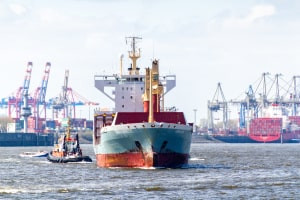
Hydrostatic Curves in Ship Stability
Sold by:
Similar Products






Sponsored
Chloé Chloe eau de parfum gift box 75 and Chloe eau de parfum mini 20 ml purse pack$148.00List: $185.00



Sponsored
Fur Blanket - THE WILDEST DREAM Beige | Rozmiar: 98x59" (250x150cm)Wildest-1-5
$690.00Cerqular

Sponsored
Fur Blanket - THE WILDEST DREAM Beige | Rozmiar: 118x19" (300x50cm)Wildest-1-7
$345.00Cerqular

Sponsored
Fur Blanket - THE WILDEST DREAM Beige | Rozmiar: 118x59" (300x150cm)Wildest-1-8
$759.00Cerqular