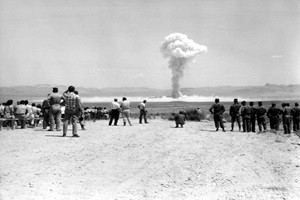
This course begins by looking at the evolution of nuclear weapons. Decades of tests involving hundreds of nuclear explosions have given scientists some information about the impact of such explosions on people and the places where they live. You may be surprised to discover that while there is no doubt about the devastation suffered by areas directly hit in a nuclear attack the overall outcomes in the broader area may not be as stark as you might expect. This course begins by tracing the history of the atomic bomb which goes back to the moment two German scientists succeeded in splitting an atom. Fearing that the Nazis would use the breakthrough to create weapons of mass destruction other governments pressed ahead with their own research. The USA tested the first atomic bomb only a month before unleashing this new weapon on the Japanese cities of Hiroshima and Nagasaki in August 1945. This triggered the arms race between the then Soviet Union and the USA with other countries also joining the competition. Hundreds of weapons have been tested: in the atmosphere in deserts underwater and underground in the ensuing decades. Several international treaties have been agreed upon to control the quantity of weapons countries can have.You will discover the impact a nuclear blast has in the immediate aftermath of the explosion and the longer term. While one might expect that the results would be clear-cut a great deal of debate continues to this day about the precise numbers of people affected by various incidents not just the devastating attacks in Japan. Research indicates that the fear of the consequences of a nuclear attack may be more traumatic and damaging than the nuclear incident itself. There is a significant variation in outcomes depending on the size and type of weapon where it is detonated in relation to ground level and the weather conditions at the time. In this course we will examine how a nuclear bomb works and the difference between atomic and thermonuclear weapons.The course finishes by studying the only two instances of nuclear weapons used in urban areas - Hiroshima and Nagasaki. You will learn about the immediate impact on both Japanese cities and the long-term effects in greater detail than in 'The Basics of Nuclear Survival’. While our first course was a practical easy-to-follow guide on what to do should such an emergency arise 'Declassified: Exploring the Legacy of Nuclear Testing' dives deeper into what science and governments know about the actual effects of such weaponry. While it may not put your mind at ease about the potential loss of life in the worst-case scenario it will reassure you and help you reassure others that the future is not necessarily as apocalyptic as you or they have feared. Begin the course today and find the answers to the questions many people should be asking.
Declassified: Exploring the Legacy of Nuclear Testing
Declassified: Exploring the Legacy of Nuclear Testing
Sold by:
Similar Products

Sponsored
NOVICA Maya Mist Mexican Hand Woven Grey Cotton Maya Hammock (Double)6647796301899
$104.95GreaterGood

Sponsored
5 in 1 Ultrasound RF Bio Hot & Cold Hammer Skin Care Facial Rejuvenation Skin Lifting Machine For Spa Salon Home Use | LF-56D1LF-56D1
$498.00List: $549.00myChway UK