This course introduces you to the concept of finite and infinite sequences. In mathematics a sequence is a progression of numbers with a clear starting point. Some are defined recursively while others stop at a certain number. In other words they have a first and last term and all the terms follow a specific order. This type of sequence is called a finite sequence. This course describes others such as the arithmetic geometric binary power triangular and harmonic sequences. Infinite sequences are an endless progression of discrete objects especially numbers. You will learn about the monotonic behaviour of sequences and what it means when a sequence is monotonically increasing or decreasing as well as when a bounded monotonic sequence converges. The Cartesian graph is a wonderful way to visualize a given sequence and the material explains in detail how to graphically represent sequences.Infinite series are useful sums that are not limited to mathematics. They also have important roles in disciplines such as physics chemistry biology and engineering. However for the purpose of this course we will focus on their applications in mathematics. We will look at how to convert to a closed-form an infinite series presented using enumeration. Convergence tests are methods of testing for the convergence absolute convergence conditional convergence the interval of convergence or divergence of an infinite series. The material covers methods for determining whether or not an infinite series converges. It states the divergence theorem and explains the tests for divergence comparison the p-series as well as ratios. The integral test is a method of testing an infinite series of nonnegative terms for convergence by comparing them to an improper integral. When testing the convergence of a series remember that there is no convergence test that works for all series. You will have to determine the right test for a given series.Many algorithms have been developed by numerical analysts to solve higher-order differential (and partial differential) equations. We will look at some of the theories and applications of first-order differential equations. You will learn how to solve first-order differential equations by integration separable linear exact and numerical methods. A differential equation is a challenge. To solve an ordinary differential equation we will have to determine the function or functions that satisfy this specific differential equation. How can a differential equation be classified? This course analyzes the Taylor and Maclaurin and Taylor. It explains the radius of convergence for each power series. If you want to learn about shortcuts for calculating series or how to calculate coefficients you should complete this course. This is a free refresher for the AP calculus exams and useful for anyone who wants to improve their overall calculus skills.
AP Calculus BC : Sequences and First Order Differential Equations
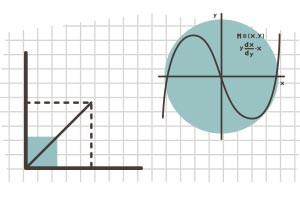
AP Calculus BC : Sequences and First Order Differential Equations
Sold by:
Similar Products